
Aggression vs Passivity? Why both will lose in the long run
The Shark rises quickly at first, but the debris they leave behind eventually catches up. The Tortoise keeps the peace, but peace often keeps them small.

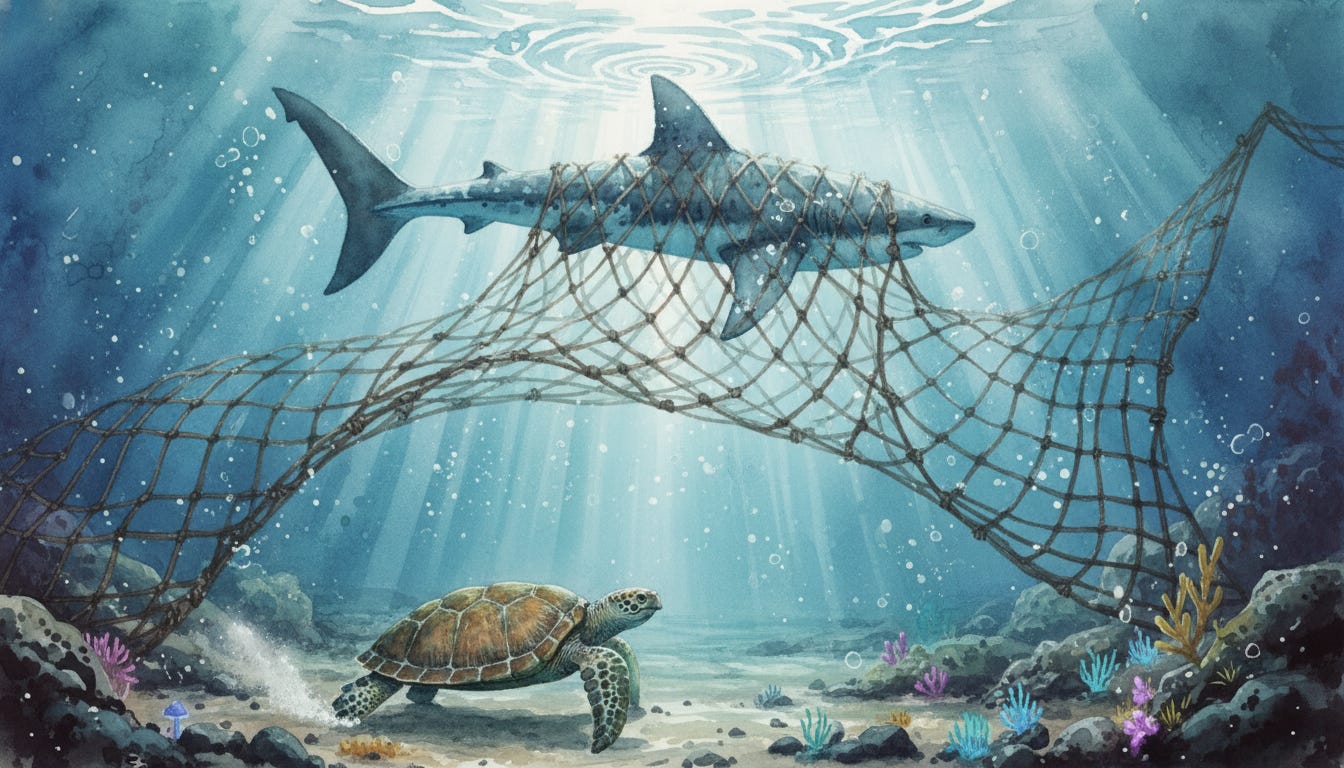
Just like the Peacock doesn’t naturally belong in the jungle yet somehow thrives in corporate, the Shark and the Tortoise are two characters who sit on opposite ends of the power spectrum and both pay a price for it in the long run.
The Sharks are individuals who tend to speak first, lead the meeting with their voices echoing through the room. They are not timid, not quiet and their presence is always felt (& heard) miles away.
The Tortoise is the individual you always forget to invite, or forget if they were invited. They sit quietly, rarely speak up (unless asked something directly) and prefer to be ‘invisible’. They would love to not join these meetings, but join because they have to.
The Shark: Strike First, Ask Questions Later
On the outside the Shark seems admirable. That level of confidence, that ease and security with which these individuals communicate is a rare talent.
They are the first to volunteer to lead projects, first to speak in meetings and often progress through organizations quickly into senior roles. As individual contributors they are the high performers, the super confident, ‘everything is under control’ individuals who seem to do no wrong.
They carry the air of movement, executing tasks with ease. Moving mountains when they have to. It almost starts to feel like nothing gets done without a Shark on the team.
In Corporate Jungle, the Sharks are often liked by leadership teams, promoted ‘early’ by average standards and given high profile projects to run with large budgets.
Aggression and Dominance
The issues start when from mid-management levels when the Sharks begin building their teams. They get to these positions quickly but unfortunately what makes them successful does not translate well when you add subordinates.
The Sharks are known perfectionists and control freaks, believing that ‘no one can do things as well as them’ which often translates to micro-management when they are in a position to lead. You will see many Sharks in Sales, Business Development and Strategy roles.
They struggle to let go, criticizing the smallest (insignificant) details and individuals, expecting the same ‘eye for perfection’ that no individual will every achieve, setting unrealistic goals designed to ‘push’ the team.
Over time this often equates to resentment and burn out, with people resigning or moving departments.
The Tortoise: Slow and Silently Overlooked
The Tortoise is the polar opposite, always calm and poised. This individual seems to always think twice before talking or moving to take any action. They wait for official sign off, direction from their manager (ideally in written form, verbal is not good enough) and will double (& sometimes triple) check the ask before executing any task.
They are reliable and steady workers. You will often see them in supporting functions like HR, Finance and Operations. They don’t take any risks or initiatives to come up with new ideas and they often won’t volunteer their opinions in meetings unless they are directly addressed. They evade all forms of conflict and would rather agree or keep quiet than challenge anyone (even if the individual is at a lower level).
It usually takes extra long time for the Tortoise to progress as they are often forgotten and overlooked over some of the more vocal colleagues.
Merit without visibility is wasted
If you are in the team with a Tortoise who is your peer, you will know them as smart and reliable to work with. They don’t do conflict, they love to please and an easy team member to get along with.
If you have a Tortoise for a manager, you might get frustrated with the ‘speed’ of the work, the low promotions, lack of credit, visibility and progression. They are not great advocates for themselves or their teams. Other departments and leaders often still the credit and the Tortoise is not known to fight back.
If the Tortoise has Cheetah’s, Sharks or Lions in the team, they are often promoted above the Tortoise even if the Tortoise has been in the position longer.
Aggression or Passivity? Which One Wins?
Aggression gets you attention. Passivity keeps you invisible. Both are survival strategies rooted in insecurity with the Sharks afraid of losing control and the Tortoise afraid of causing conflict.
In the long run, neither aggression nor passivity gets you ahead. The Sharks often pushed out after a few years with a high team churn, the Tortoise stay at the same level for decades.
Real Power is in Strategic Assertiveness
You need to understand the ‘extremes’ and use the Strengths of the two to cultivate Strategic Assertiveness:
Body language: learn to maintain eye contact when you talk, firm handshake and stand up straight
Communication: speak clearly with a purpose without apologizing or attacking, state facts and information to inform
Conflict when necessary: learn to disagree without raising your voice, escalating by making comments personal, keeping language neutral
Set boundaries: communicate your working habits and set expectations e.g. I leave the office at 6pm but if there is an emergency, please send me a WhatsApp, give me a call
Lead but don’t micro-manage: assign tasks and give your team members time to deliver work. Provide feedback without raising your voice to help them improve. They might not do things as well as you, but if you can’t teach them, you should not be in this position
Advocate for yourself and team: Give credit to the team and individuals and learn to promote your projects. Even if you don’t care, do it for the team. They deserve the visibility and the praise.
In the Corporate Jungle you need to be both steady and fast. You need to know when to speak up and when to hold back.
If you have natural Shark tendencies, you need to slow down, be the last person to speak and think twice on ‘what’ you are contributing to the conversations. Don’t take the spotlight just because you can.
If you have natural Tortoise tendencies, you need to take more risks and learn to speak up for yourself and the team. Don’t let someone else take the credit for your work, that is seen as ‘weakness’ and you will be eaten alive for this behavior.
Have you worked with a Shark or a Tortoise?
Were they similar or totally different? I would love to know your experience.
A balance needs to be struck to achieve the best success
Oh! This is a great explanation of shark and tortoise kind of corporate employees.
I have encountered this kind of personality and have observed similar consequences.
Difficult for each of them to imbibe a part of other's characteristics.
But the one who has, have grown leaps and bounds.